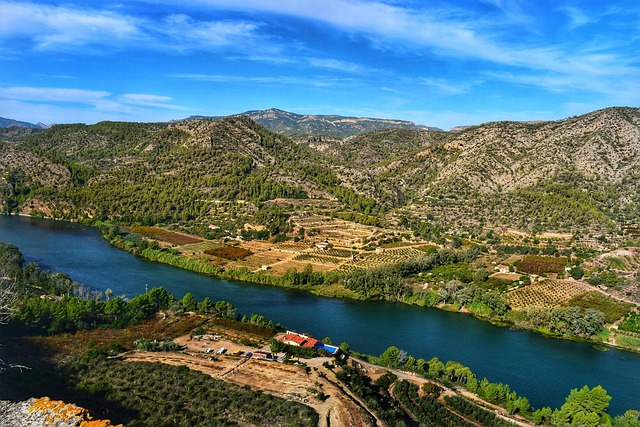
Welcome to Your Homesteading Journey: A New Off-Grid Blog Series!
From Vision to Ground, How to live Off-Grid Part 2: Choosing Your Homestead Land
+10 Skills to Master Before You Buy
In Part 1, we built your psychological foundation, the “why” that will sustain you through challenging seasons.
Now, we bridge that internal map with an external one.
This is where your vision meets the dirt, where your “why” transforms into “where.”
Choosing homestead land isn’t real estate shopping. It’s selecting the primary partner in your resilience journey.
A beautiful view can’t water your garden during a drought. A low price per acre means nothing if the cost to make it livable breaks you.
Today, we move from dreaming to evaluating, and while we search for land, we’ll build the skills that will make it flourish.
The Land-First Mindset
Your Three Essential Shifts
Before you look at a single listing, recalibrate your perspective. You’re not looking for a house with land; you’re looking for a living system with housing potential.
Shift these three priorities immediately:
- From Aesthetics to Function: A southern slope (in the Northern Hemisphere) is more valuable than a mountain vista. It means longer sun exposure for solar panels and gardens.
- From Price-Per-Acre to Cost-To-Develop: That $15,000 10-acre parcel needs a $25,000 well, a $10,000 driveway, and brings $0 in income. The $40,000 5-acre parcel with a well, road, and established pasture is the smarter investment.
- From House-Centric to Systems-Centric Planning: Ask first: “Where will the garden, orchard, and animals go?” Then: “Where does the house fit within that layout?”
With this mindset, you’re ready to evaluate land not as a consumer, but as a creator.
The Homestead Land Evaluation Framework
The "Big 5" Non-Negotiables
These five elements make or break a property’s potential for self-sufficiency. Fail one, and you’re fighting an uphill battle forever.
1. Water Security: Your Absolute Deal-Breaker
No water, no homestead. Period.
What to Investigate:
- Source: Deep well, spring, year-round creek, or legal rainwater catchment? Assume you’ll need a backup.
- Rights: Is water “regulated” in the state/county? Do you own the rights to it? In Western U.S. states, “first in time, first in right” prior appropriation laws can leave new landowners high and dry.
- Quality & Quantity: Get a water test for potability and a flow test for gallons-per-minute (GPM). A well producing 1-2 GPM is a red flag for a family.
2. Soil & Topography: The Foundation of Your Food
Your soil grows your calories and handles your waste.
The Critical Checks:
- Soil Composition: Use the free USDA Web Soil Survey. You want loam, not heavy clay (poor drainage) or sand (holds no nutrients).
- Percolation Test: Before buying, test if the soil can process wastewater. A failed perc test can prohibit a standard septic system, adding $20,000+ for an engineered alternative.
- Slope: Gentle, south-facing slopes are gold. Steep north-facing slopes are cold, shaded, and difficult. Flat land can mean poor drainage.
3. Sun & Wind Exposure: Your Free Energy and Climate Control
The 24-Hour Test: Visit the property at sunrise, noon, and sunset.
- Where does the sun hit first and last?
- Are there natural windbreaks (tree lines, hills) to shelter buildings and animals from prevailing winds?
- Is there a clear southern exposure for a solar array?
4. The Legal & Regulatory Landscape: The Invisible Fence
Your dreams can be vetoed by a county codebook.
Your Due Diligence Checklist:
- Zoning: Is it agricultural (A), residential (R), or unzoned? “R-1” often forbids livestock.
- Building Codes: Are there minimum square footages? Restrictions on tiny homes, shipping containers, or earthbag construction?
- Agricultural Exemptions: Can you build essential outbuildings (barn, workshop) without a permit?
- Animal Ordinances: Are chickens, goats, or bees allowed? Are roosters banned? What about slaughter?
- Rainwater Collection & Septic: Are they fully legal, restricted, or regulated?
5. Access & Community: Your Lifeline
Isolation is romantic until you need a spare part, a midwife, or a helping hand.
Evaluate:
- Road Access: Is it a county-maintained road or a private easement? Who plows it? Will you be stranded in mud season?
- Neighbors: Talk to them. Are they supportive of homesteading? Will they complain about roosters or the smell of manure?
- Proximity: How far to a feed store, hardware store, hospital, and bulk grocery? These miles add up in time and fuel.
The 10 Skills You Can Practice TODAY
Searching for land can take months or years. Don’t wait. Building skills now builds confidence, informs your search, and prevents overwhelm on Day 1. Consider this your homestead internship.
The Philosophy: Mastery on a small scale translates directly to competence on a large scale.
Skill #1: Water Analysis & Management
Why It Matters: Teaches you to think in gallons and systems, not just “has a well.”
Practice Now:
- Track your household’s exact water usage for one week.
- Set up a 55-gallon rain barrel on your patio or apartment balcony.
- Learn to repair a leaky faucet and install a low-flow showerhead.
30-Minute Starter: Calculate how many gallons of water you’d need to store to survive a 2-week drought for your family.
Skill #2: Basic Soil Science
Why It Matters: You’ll learn to value good loam over a “nice view.”
Practice Now:
- Perform a jar test with soil from a local park to see its sand/silt/clay composition.
- Start a small compost bin with kitchen scraps.
- Grow a windowsill garden of herbs, noting how different plants respond to soil moisture.
30-Minute Starter: Research the native soil type and common amendments of your target region.
Lorem ipsum dolor sit amet, consectetur adipiscing elit. Ut elit tellus, luctus nec ullamcorper mattis, pulvinar dapibus leo.
Skill #3: Solar & Energy Literacy
Why It Matters: You’ll prioritize southern exposure and understand true energy costs.
Practice Now:
- Conduct a home energy audit. Unplug phantom loads.
- Calculate the wattage of your daily-used appliances (fridge, laptop, lights).
- Buy a small 20W solar panel to charge a phone or battery bank.
Living Off the Grid : A Simple Guide to Creating and Maintaining a Self-Reliant Supply of Energy, Water, Shelter, and More
30-Minute Starter: Use Google’s “Project Sunroof” to see solar potential at a friend’s house or a target area.
Skill #4: Passive Climate Control
Why It Matters: You’ll spot land with natural advantages for heating and cooling.
Practice Now:
- Map the sun’s path across your current home. Which rooms get morning vs. afternoon sun?
- Experiment with thermal curtains, close them on hot sunny windows, open them on cold sunny ones.
- Practice ventilating your home by strategically opening and closing windows to create cross-breezes.
30-Minute Starter: Sketch a simple floor plan and draw where you’d place deciduous trees (summer shade, winter sun) versus evergreens (windbreaks).
Skill #5: Hand Tool Proficiency
Why It Matters: Reduces fear of raw land; you’ll see potential, not just work.
Practice Now:
- Build a simple raised garden bed or set of shelves.
- Learn to sharpen a kitchen knife, then a hatchet properly.
- Master drilling pilot holes and driving screws without stripping them.
Manual of Purpose-Made Woodworking Joinery
30-Minute Starter: Practice making identical, square cuts on scrap wood with a handsaw.
Skill #6: Food Preservation Foundations
Why It Matters: Connects land fertility directly to year-round security.
Practice Now:
- Can a batch of jam or pickled vegetables from the farmer’s market?
- Dehydrate apple slices or herbs in your oven on its lowest setting.
- Ferment a jar of sauerkraut or kombucha.
Emergency Food Preservation Techniques : Canning, Drying, and Storing for Longevity: Keep Your Food Safe and Shelf-Stable with Emergency Food Preservation
30-Minute Starter: Research the difference between water-bath canning (high-acid foods) and pressure canning (low-acid foods like meat and veggies).
Skill #7: Natural Observation
Why It Matters: This is the #1 skill for evaluating a property’s microclimate.
Practice Now:
- “Read” a local park: Where does water pool after rain? Which plants grow in the sun vs. shade?
- Track the sunrise and sunset points on your horizon for one month.
- Identify five common bird calls and what they signify.
30-Minute Starter: Sit quietly in a green space for 15 minutes and write down every element of the ecosystem you observe (insects, plant layers, animal signs).
Skill #8: Map & Document Literacy
Why It Matters: Lets you vet properties remotely and ask intelligent questions.
Practice Now:
- Navigate your county’s free online GIS mapping system. Find parcel boundaries, owners, and zoning.
- Study a topographic map of a local hill. Understand how contour lines indicate slope.
- Pull a soil survey for a property you’re curious about.

Updated World Atlas 2025-2026 : The Essential Reference Guide to Detailed Maps, Country Facts, Climate Zones, Trade Routes, Geographic Insights, and More
30-Minute Starter: Use OnX Hunt or a similar app to look at satellite imagery and property lines of rural areas.
Skill #9: Knots & Temporary Fixes
Why It Matters: Fosters the “maker” mentality crucial for the first chaotic years.
Practice Now:
- Master 5 knots: bowline (fixed loop), taut-line hitch (adjustable tension), trucker’s hitch (for tightening), clove hitch (quick post tie), and square lashing.
- Use a tarp and rope to build a simple rain shelter or shade structure in your yard.
Knots and Nets – The Various Types, How to Make Them and Practical Uses for Them
30-Minute Starter: Practice tying a bowline behind your back. It’s the ultimate “one-handed, in the dark, in the rain” useful knot.
Skill #10: Local Ecosystem Networking
Why It Matters: Reveals the real-world community your future land sits within.
Practice Now:
- Visit your county’s Cooperative Extension office. Get their publications.
- Find and attend a local seed swap or plant sale.
- Go to your nearest feed store (even if it’s 30 miles away) and ask about chick orders, hay prices, and local vets.
30-Minute Starter: Find and join the most active Facebook group for homesteaders in your target state or region.
Your Integrated Action Plan
Search & Skill in Tandem
Don’t sequence these tasks, parallel them. Here’s your 6-month roadmap:
Months 1-2: Deep Skill Dive + Broad Region Search
- Focus on Skills #1 (Water), #2 (Soil), and #8 (Maps).
- Research states and regions that align with your climate goals and legal priorities.
- Listen to podcasts or read blogs from homesteaders in those specific areas.
Months 3-4: Targeted Research + Intermediate Projects
- Focus on Skills #3 (Energy), #6 (Preservation), and #10 (Networking).
- Narrow to 2-3 target counties. Study their GIS maps and call their planning departments with specific questions.
- Start a larger container garden or build a more complex carpentry project.
Months 5+: Property Visits & Due Diligence
- Apply Skills #4 (Climate), #7 (Observation), and #9 (Knots/Fixes).
- Visit properties in the worst season. Camp on the land if possible.
- Perform the “Big 5” evaluation in person. Test, measure, and observe.
The Land Chooses You, Too
You are not just finding land. You are finding the teacher for the next chapter of your life, a partner that will test you, reward you, and shape you in ways you can’t yet imagine.
Let your growing skills be your guide.
They will quiet the anxiety of the search and bring clarity when you finally stand on the right piece of earth.
Your move this week is dual-pronged:
Pick one skill from the list above to practice, and research one element of the “Big 5” for a county you’re considering.
Which skill will you start with? Share in the comments, your future homestead neighbors are here, learning alongside you.
Ready for the next phase?
In Part 3: Your First 90 Days on the Land, we’ll take your chosen property and build your step-by-step blueprint for shelter, water, and food systems from the ground up. The journey from vision to ground is underway.
The Land Chooses You, Too
You are not just finding land. you are finding the teacher for the next chapter of your life, a partner that will test you, reward you, and shape you in ways you can’t yet imagine.
Let your growing skills be your guide.
They will quiet the anxiety of the search and bring clarity when you finally stand on the right piece of earth.
Your move this week is dual-pronged:
Pick one skill from the list above to practice, and research one element of the “Big 5” for a county you’re considering.
Which skill will you start with? Share in the comments, your future homestead neighbors are here, learning alongside you.
Herbalist is a fantastic skill to learn for off-grid life, see this course if you are unsure where to start.

Ready for the next phase?
In Part 3: Your First 90 Days on the Land, we’ll take your chosen property and build your step-by-step blueprint for shelter, water, and food systems from the ground up. The journey from vision to ground is underway.


